Saturday, February 13, 2016

New Destinations: Roanoke, Virginia

From Portland, across the country to Carlisle, Pennsylvania. I wrote about Carlisle last year (See Historic Carlisle entry, posted January 2015), so I'll tell you about the road trip we took to Roanoke, Virginia, where my dear friend Marjorie's son lives. Before the road trip we stopped at the Lindt Chocolate factory outlet, conveniently located on the outskirts of the town she lives in. I don't think I'd be able to resist going there every week, if I had that store practically in my back yard!


Our plan was to meander the 4 hours south, to where her son and his family live, making a stop midway, in Harrisonburg, to dine at a German restaurant there. Having grown up in Germany, we were both looking forward to a taste of our youth. Unfortunately, we had dithered too long at the chocolate store and missed the restaurant's lunch opening by 20 minutes: it had closed at 2PM!

We were both so hungry, having breakfasted early and waited our lunch in anticipation of the German palate teasers. Now, with no German food to be had, we scrambled for meal options, finally deciding on a chain buffet restaurant, where we ate more than our fill. Buffets tend to have that effect, you know?

Marjorie and I have been lifelong friends, so naturally we watched each other's kids grow up, marry and have kids. Seeing her son and his family again was not at all inordinary. I felt the welcome radiate from this fine young man and his gorgeous wife. Even their young son remembered me from my visit 2 years ago! An added bonus: Ana's mother, Cielo is visiting from Columbia. I knew her to be beautiful from the pictures Marjorie shared over the years, but seeing her in person... the woman is breathtaking!

Our first evening there, we sat around, catching up on life. Terran's current hobby is role-playing to the movie Aliens. A significant portion of his house's basement is dedicated to Aliens, and he manufactures all of the costumes. The whole family gets in on the fun! Here's Marjorie, wearing a helmet and toting a gun that Terran built himself, out of scrap metal. He did all of the weaponry on the wall, as well as the armor on the mannequin.


It seems good weather follows me on my travels, so the next day we woke up to sparkling sunshine, reflecting off the snow that lingered from the storms of the week before. Terran treated us to a traditional Southern breakfast while the rest of us scrambled to get ready. I was so eager to take in the sights, sounds and smells of Roanoke!

That city, established in 1852 was initially called Big Lick, from the large outcropping of salt that drew wildlife to the area, making hunting particularly fruitful. It was officially chartered in 1884 and renamed Roanoke, from the native American word for 'shell money'. Roanoke is also the name of the river flowing through it; most likely where the shells used as money came from.

Roanoke prospered with the railroad, and thrived because of the garment industry. However, around the 1960s, people started leaving and not coming back. This phenomenon, known as 'brain drain' or 'human capital flight' signified doom for this historic city until local and federal governments stepped in with preservation incentives and new industry moved in. Now, Roanoke is tentatively hopeful for the future, and so am I. I'd hate for Terran and his family to have to relocate yet again!

The Star seems to be a major tourist draw. I was immediately intrigued because Marjorie's husband mentioned it before we even left Carlisle. Terran echoed 'The Star' when planning the sightseeing route, and for good reason. It truly is worth seeing.


In 1949, area merchants decided to kick off the holiday shopping season in spectacular fashion: by building a monumental star atop Mill Mountain, the highest point of the city. Although said merchants weren't sure at the time whether they wanted the star lit year-round, eventually that became the norm. Initially lit with white lights only, soon the city decided to use red lights on the days anyone died in a traffic fatality, to honor them. After the September 11th attacks, the star was lit with a red/white/blue configuration which stayed until 2007. On April 22nd of that year, city officials decided to revert to the all-white motif as a symbol of hope after the Virginia Tech Massacre.

Suitably impressed, we took in other sights: St. Andrew's Roman Catholic Church, the Blue Ridge Parkway and the historic Farmer's Market. Although history is interesting to me, I was more interested in Terran's life: where he works, were his family goes to church, where their newborn daughter will be baptized. He graciously obliged me, cruising all over town. None of those locations are particularly noteworthy or picturesque to anyone not intimately connected to the family. Thus, I offer you the stunning cathedral.


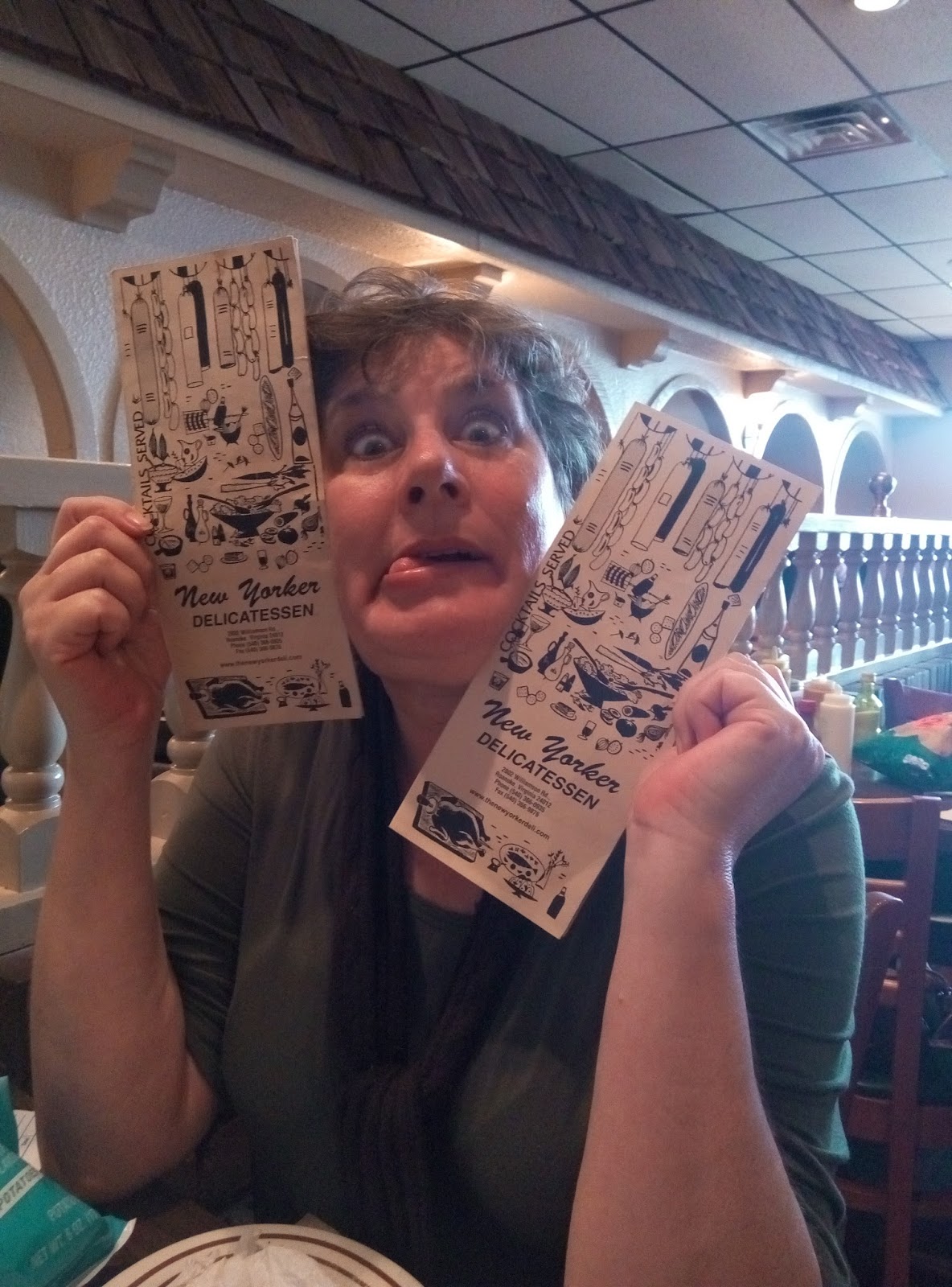
We enjoyed a savory lunch at a New York style deli. Marjorie and Terran were both hungry for pastrami. I scanned the menu for something more to my taste, and then laughed aloud: that deli offers a Vagabond Sandwich! This being the Vagabond blog, I thought that sandwich must be tailor-made for me. It was delicious!


Back home for an evening with family; last laughs, fond memories, posing for pictures and getting ready for the start of the week... at least for the Roberts. As for me, I had to get ready for a 32-hour bus ride, to my dear ones in Texas.

And speaking of Texas, the Lone Star State: visiting the Roanoke star reminded me of all the fun waiting for me. 


See you there!      

Thursday, February 11, 2016

New Destinations: Crater Lake


Finally I'm at Darrell's house, anticipating all that he has planned for my visit. Mind you, I'd be perfectly fine sitting around loved ones' houses, soaking  them up and being a part of their lives for just the little while I'm here, but everyone always plans over-the-top entertainment. I love them for it. And for many other reasons.

But then, with loved ones: does one need a reason to love them? And, while thinking of great loves: I hear my beloved China is suffering its worst winter in thirty years! Buck up, my Chinese friends; it will soon get better. My heart and thoughts are with you even as I revel in the warmth of kith in kin.

As usual, my first stop was my son's house. Darrell had to work the first few days I was in Portland but had taken time off for the rest of my visit. Thus, after a few days to get used to being here, we loaded up the car and took off for snowier realms: Crater Lake. 

Let's back up for an instant.

We all know of the Seven Wonders of the World, right? The Pyramids, The Hanging Gardens, the Colossus of Rhodes and all, right? Well, Oregon has its own Seven Wonders, and Crater Lake tops that list.

It sits in the caldera of a dormant volcano. It is not fed by any other bodies of water. Its content comes solely from rain and snowmelt, making it one of the purest bodies of water in the world. The azure blue you see in the picture is a result of that, not of any Photoshop wizardry. It is the deepest lake in America and the 7th deepest in the world – or the 9th deepest, depending on whether average or maximum depth is measured/counted.  


See what I mean about my loved ones planning over-the-top entertainment for me? I had the privilege of seeing this wonder with my own eyes, but not before we drove through a mountain pass, and banks of snow more than 9 feet (3 meters) high.


I should tell you that little Benjamin came along, and Zeva the dog got her snow on, too. She loves playing in the snow! See her retrieving a snowball?


Driving home from this adventure, we passed through the Columbia River Gorge. In fact, the Columbia outdoor gear that is currently all the rage in China is named after that river, and the company's headquarters are in Portland. The Gorge, as it is known, is another of Oregon's wonders. That state's other wonders are: Mount Hood (a dormant volcano), The Painted Hills, Smith's Rock and the Oregon Coastline.

On a... worrisome note: I found myself terrified to climb the small, snowy slope to get up to the lake. I had broken my leg climbing down a gentle slope last year and found, much to my dismay, that I am now terrified of climbing or descending any slope for fear of breaking another limb. Darrell to the rescue! He pulled me up to the rim of the lake so that I could see for myself this scenic marvel. But then, I had to get back down that slope. A panic attack nearly overwhelmed me until Darrell suggested a foolproof way to get down. As you can see, I made it down the hillock just fine!  


Although sliding was fun, I don't want to have a panic attack every time I partake of my usual adventures because I'm afraid of breaking another bone. That's what is truly worrisome.


Arrival U.S.A.: Getting Through LAX


You might guess by the title that I am again among my loved ones, after a grueling fifty-plus hours in transit. Little Benjamin has just had a bath and been put to bed, Samantha is studying and Darrell is at work – the overnight shift. Zeva the Dog lays at my feet and the cat is curled up on the arm of the chair. I find myself at loose ends, having slept like a log last night: no jet lag for me!

The trans-pacific plane ride did not last fifty hours; in fact, it went rather quickly. What did me in was the 16-hour layover in Hong Kong. I got a great deal on the ticket but I'm not sure the thousand Yuan I saved was worth the time spent in transit. The trouble is that I cannot seem to sleep on the road so, all night and into the next day I stumbled around Hong Kong airport, enviously staring at those who seem to be able to sleep in any position, in any environment and in any condition.

That 'not sleeping' deal applies to plane rides, too. I might have nodded off for a few minutes out of sheer exhaustion, but true sleep never visits me in transit. So, you can imagine what fine form I was in when we finally touched down in Los Angeles.

Last year I glossed over the pain and aggravation of getting admitted to America. Now, I'm glad I did because this year, the 'clearing customs' ritual has established an all-new level of annoyance and aggravation, and I get to tell you all about it!

LAX's Tom Bradley International terminal must have been planned and laid out by fitness gurus who hold the belief that extended walking is the secret to unhappy life, or by blind architects. The distance from the jetway to the passport validation area – the step that precedes claiming baggage and clearing customs is convoluted and consists of up-and down-ramps, escalator rides and more than a few meters of straightaway concourse. As opposed to many other airports, there are no moving sidewalks. That might help explain why I believe sadistic fitness gurus might have been involved in the planning and design.


Normally I would not balk at taking exercise but, because of lack of sleep and sitting overly long, my newly mended leg was screaming. And then, when I thought of all the standing and queueing still to be done...

After about 10 minutes' walk we all arrived in the great hall, ready for passport  examination and customs declaration. Whereas visitors to the country were instructed to enter the first serpentine queue marker, those with American passports had to walk to the end of the large hall to line up, switchback style. The line had already folded back on itself 7 times by the time I got there. I was not happy.

And then, futher aggravation set in when we collectively noticed a line of machines. Assistants were inviting queued-ups to face the contraption. Others coached the bewildered travelers on how to use the machine. “What could these be for?” I wondered.

Finally, my turn to face the gadget. After engaging it by requesting it speak to me in a specific language, it asked my name, nationality, purpose of coming to America. Next screen asked what type of passport I have, and what country issued it. Third screen detailed duty items: had I anything I needed to declare? Did I bring any produce or seeds? Soils? Had I been in contact with any livestock while abroad? Am I importing gifts totaling... what amount? And then, I was to present my passport to the built-in scanner. Next, the machine instructed me to remove my glasses, adjusted itself to my height and took my picture. The ritual concluding by it printing a receipt, with the instructions to present that paper to the official who will inspect my documents in the next stage of the process.


This step of in-processing is new. Last year, we were all given a blue and white form to fill out while still in flight which, after the death-march through the terminal and endless queueing, we were to present to a security officer, who would ask leading questions such as: “What were you doing in China?” “Why did you come back?” Where will you go?” in order to ascertain whether or not you are a terrorist. By that short conversation, your form would be marked in a certain way, indicating to the officer downstream that your bags are to be opened and checked, or you should just be waved through.

Those new gizmos asked the same questions as the officers did last year, so I reckoned that, once more a machine has supplanted a human. After moving further up the new serpentine queue I found myself in after wrangling with the machine, the officers' booths – minimally staffed, were still in place, and travelers still stepped up to and stopped at them, handing over documents. Officers made conversation, supplicants removed eyewear and pictures were taken... just as the machine had done. 

I thought that those officers were there to ease the pain of transitioning to the automated passport validation system so, when my turn came to be interviewed by such an official, I asked if the machines will indeed take their job in the near future. “No” he replied. “It's just another layer of security.”

I'm confused. Those machines, no doubt having cost the taxpayers a bundle, asked the same questions and fulfilled the same function as the officer. While it is true that a machine would not necessarily be able to interpret subtle nuances of body language, all other aspects of the entry process are done mechanically.

And these machines are supposed to help thwart terrorists' feet touching American soil? Wasn't it just a few weeks ago that ISIS claimed responsibility for a shoot-up in San Bernadino? And, the American economy being what it is – the poor getting poorer, can America afford to throw tax money toward  a redundant layer of security?

My sleep-deprived mind pondered that as we all queued up for the next step in the process: claiming our bags and going through customs. Here, there were no serpentine arrangements, just lines of people, stretching out as far as the eye can see,  front to back, the entire length of the building. To get to the proper carousel, we had to cross those lines, and then find a place in one of the three lines and wait.


Progress was slow. Several travelers around me fretted over missing their connecting flights. An officer on the fringes insisted that this procedure is normal, that no one line is moving any faster than the other, and that everyone should just be patient.

I've been in plenty of airports, around the world. I contend that only Israel beats America in aggravation as far as entry procedures. They have good reason for it: their country is constantly in turmoil/under attack.  Presumably America is also under attack, and these measures are necessary. However, in all of the time I've been traveling in and out of America, the only terror incidents I've heard about are 'homegrown' – initiated by citizens who've lived there long-term.

Gaining entry was an aggravating time. Fortunately, we had scheduled my connecting flight to Oregon for several hours after touchdown in L.A. so that there would be plenty of time to go through all of the procedures necessary for admittance to the country.


Nevertheless, in the back of my mind, niggled: “How must they feel: those who, their whole lives, have dreamt of coming to America, only to be confronted with... this?”              

Thursday, January 14, 2016

A Letter to a Thief


Dear Thief;

First, I'd like to thank you for affirming my feeling: my bike, with its sassy red and white striping, is worth a second look. No doubt that is what prompted you to take a closer look at it, thus realizing you could make off with one of its accessories. The computer attached to the handlebars might not be of much use to you, especially since you only took the display – not the wiring, sensor or mounting cradle, but then: who knows what motivates a thief to steal anything? Certainly not me. I can't even conceive of taking anything that doesn't belong to me, whether I need it or not.

This is the third time something has been stolen off my bike. The first time, while my lovely bike was chained to a bus stop, the flashlight used as a headlight was taken. I take total blame for that; I should have known better than to leave such a useful and convenient accoutrement so blatantly available, especially as that particular bus stop lies directly along the path that middle-schoolers follow home. I can see a child's eye captivated by that tall, red-and-white machine that I ride, and being tempted to snag that light. What child doesn't like a flashlight? Especially a cool, compact one with a high-discharge LED beam?

The second time, a thief made off with the pump I kept strapped to the bike's rack. Whereas I usually keep my bike in my house, that day it was parked just outside my ground floor apartment because I had to go to class that afternoon. During my mid-day snooze, I thought I heard someone tinkering with my bike through the open balcony door. Too lazy and sleepy to get up, I told myself it was all in my mind, and kept on drowsing.

That theft was a bit more disappointing. I'd kept that pump on the back of my bike ever since I've owned it and it had never been taken, even when I left the bike at a bus stop (so I could ride public transportation into town). On our campus, everyone knows that bike is mine, and I'm well-liked by everyone. I can't imagine anyone here deliberately stealing something from me. However, I have an upstairs neighbor who is... not quite right in the head, to say it kindly. He scavenges around campus, hauling all manner of things to store in our building's foyer. Every few days, it gets to be too messy and then, I can hear him muttering to himself as he sorts through his trash, deciding what to haul away and what to keep.

If he is indeed the taker of my bike's pump, I can forgive him. Surely, he doesn't know any better. Besides, a bike pump can be useful in all sorts of ways. So, that theft, too, makes a measure of sense.

But you, dear Thief. You are a complete stranger to me and to my bike. You took something you cannot possibly use, and that has no meaning to you. You stripped my beloved ride of a tool I need to gauge my riding. You see, I don't just ride because it is fun and healthy. I ride because I intend to reach a goal I'd set for myself since my return to good health 2 years ago: riding long distance.

Because of my broken leg, I was forced to stop training. My plans for the summer just past, distance riding, were shelved because I hadn't healed enough to undertake that challenge. Now, with a clean bill of health, I'm letting nothing stop me from training: not bad weather or cold, not the ache in my knees or my breath, rendered harsh from the dirty air. I may cough for hours after a ride and suffer a raw throat, but for me, it is all worth it to reach my goal.

And then, while visiting with my good friend, who lives in a newly-built housing area where apartments sell for thousands of Yuan per square meter, you, low-life taker of things not yours, saw fit to strip me of the tool that is helping me track my progress and fitness. And for what? What could that computer interface possibly do for you?

Now, I need to thank you again, Thief. I had always believed in humans' fundamental good nature. I had always believed me and my things were safer in China than anywhere else in the world and, surely, leaving my bike in the foyer of a new, fancy apartment building, it would be safe from people like you. Now I see how wrong I was. I now know I will have to be ever vigilant, making sure I leave nothing for you to take. I will have to live as though you are around every corner, ready to snatch what doesn't belong to you.

See how you damage society with your selfishness and greed? And I'm only one person. Imagine everybody having suffered a theft. Wouldn't they too lose faith in humanity? Be wary of new contacts? How can anyone be open and friendly when there are people like you, ready to take what is best about people - trust, and destroy it?      

What if somebody stole something of great personal value from you? How would you feel? Would you even feel?

Finally: I thank you a third time, Thief. That computer had stopped working for some reason, and I was going to replace it anyway. I couldn't justify rushing to town to buy a new one, with my month-long absence from the country imminent, and I was loath to spend the money on a new computer if all the old one needed was a new battery (I hadn't had time to check it, yet). I was going to wait until I got back to China to resume my fitness log. Since your pilfery, I can justify spending 50 Yuan on a new accessory. And I get to laugh at you for stealing something that doesn't work. 

But make no mistake, Thief: I will attach my new device in such a way that you will have to work to steal it.


                                                          With accessories


                                                                 Stripped!

Wednesday, January 6, 2016

2015; The Year in Review


By all accounts, personal and general, one could say that this has been a bad year. For some reason, I saw fit to snap my leg while on a hike, which resulted in emergency surgery 5 days before boarding a plane back to China, in February. It took me nearly all year to heal. Meanwhile, the trickle that had been Syrian refugees early in the year turned into a flood because of escalating violence in their homeland. ISIS further claimed responsibility for an attack in Paris and again in San Bernadino, California.

The ChinaDaily blog server – where I contribute in addition to our own blog - was hacked; all articles, comments and commendations were lost. Working with that site became an exercise in frustration: comments wouldn't post, pages couldn't be accessed... fortunately, ChinaDaily techs were hard at work, retrieving articles thought lost forever. I didn't give up hope on that community but... 

Right around that time the fall semester started and, because my colleague had been arrested and deported (see The Man With A Plan entry, posted  September of this year), I soon became overwhelmed, teaching several classes per day – a far departure from the previous semester, when I only had 3 classes per week. Because I was so busy, and focused on nothing but teaching, I didn't  write anything for several months.

Fortunately, by the time that classroom madness started my leg had healed sufficiently to manage the rigors of standing for hours a day and climbing stairs to get to my rooms. However, only last week did I get a clean bill of health: the doctor declared it completely healed. You can't imagine the amount of pain killers I swallowed just to keep up with myself these past months! 

Taking a broader view of thing: tempers and fear flared around the world because of terrorism: 374 attacks worldwide this year alone (source: Wikipedia)
https://en.wikipedia.org/wiki/List_of_terrorist_incidents,_July–December_2015

We only heard about the big ones: Bankok, Paris, California but, it seems from the statistics that every day, somewhere, people were running for their lives. Rest in Peace to those who didn't get away, who were caught up in someone else's madness and suffered for it.

Let's not forget those who perished in plane crashes, because of bad weather, at the hands of others in non-terrorist acts and those who, by their own hand ended their suffering. They should rest in peace, too.

Yes, by any reckoning, one could say that this has indeed been a rough year, all around. What made it golden for me was the kindness shown, both personally and worldwide during this difficult year.

European countries are risking their economies sheltering refugees. All over the world, people grieved for those slain during the various terrorist attacks – at least, those reported in the news. We shared a frisson of fear at their possible escalation. In these terrible times, we united in care and sympathy for everyone who needed succor, whether we, personally could do anything to help or not.

As for me, kindness and care enveloped me like a gentle blanket throughout the year. Starting with family, who cared for me during and immediately after my hospital stay. And then, the flight crew who ministered to me when I threw up on the plane – one of them, apparently moved by my pitiful condition, offered a 'fu' 符 for good luck after helping me clean up. I guess he thought I needed it? And, all of those devoted people pushing my wheelchair-bound self through the airport in Beijing and Wuhan, even offering bathroom stops along the way. After having been left stranded in LAX, where no one would so much as bring me any food, let alone permit me to stay in a wheelchair (the aide stated she had to take her chair with her, leaving me on a bench in front of the deserted Air China counter with my luggage, a broken leg and a pair of crutches), the charity and support offered in China caused me to spill tears of relief at feeling no longer alone and helpless.

And Sam, who met me at the airport! Not only did he arrange a replacement ticket for the plane I missed in Los Angeles (because of uncoordinated efforts of the handicapped assistance team, along with the less-than-urgent disposition of those pushing my wheelchair), but he accompanied me home and stayed 2 hours, seeing to my comfort, preparing something to eat (I'd not eaten the whole flight because of my upset stomach), arranging my sleeper sofa so that I'd have an easier time settling in. And all of this when he should have been with his family, celebrating Spring Festival! Sam deserves a medal for the valor he displayed. What he and his family have done for me this year goes far beyond kindness. I can never thank them enough.

The list goes on... 

The dean rearranging all of my classroom assignments to the first floor of the teaching building nearest my house in the aftermath of my leg-break so I wouldn't have to hobble so far or attempt the stairs. Teachers with cars, chauffering me to and from class. Students helping carry my things whilst I crutched to and from class.

Friends who drove me to the store, and then carried my groceries into my house, and put them away for me. Friends who saw to it that I had a measure of entertainment, inviting me on outings, even though I would slow down the fun with my crippled gait. Friends who made the trip to my remote outpost in Wuhan for a visit. Friends on the ChinaDaily blog site who, worried at my long absence, sent concerned messages.

And, from total strangers:

The bus driver who, noticing my pronounced limp while walking to the bus, took special pains to see that I was settled before leaving the bus stop. The policeman who, seeing that I couldn't make it across the street before the light turned red, stopped traffic to ensure my safe passage. My neighbors who, knowing I was incapacitated, took it upon themselves to bring me fresh veggies, and never accepted payment (but I did manage to sneak in a gift or 2).

If I should expound on year 2015 in the future, it will be kindness that I will remember best. The old man on the bus who insisted I take his seat, even though he was bowed with age. Those who ran to help in the aftermath of the Bankok and Paris attacks. Those who took in refugees at the risk of collapsing their own economies.

As though to underscore the kindness theme of this year: the dear soul who, seeing my bike chained to the bus stop one day when the weather turned foul, worried that my seat might get wet, and so placed a plastic-wrapped mouse pad on it, to keep it dry. S/He even went so far as to tuck it between the seat and the pole it was chained to, so that the cover would not blow off in the sudden storm. That person had no idea who that bike belonged to so I can't say that his/her actions were kindness directed specifically at me. I can only infer that that person just brimmed with a desire to do good, and so committed a small, thoughtful act that touched my heart.


Oh, if everyone could be that good!!!   

Alice and Sylvia


A few months ago, one of my colleagues asked me what I thought our students' biggest problem was, with regard to administration. “Lack of accountability” was my immediate response. He mulled it over for a few seconds, and came to the same conclusion.

I don't know about other schools but here, students can 'play' on their phones the whole of class time, while the teacher lectures on and on. They can hold none-too-quiet conversations; our teachers have recently been outfitted with portable amplifiers so they can shout over any classroom babble. Students don't have to participate in class. All they really have to do is be there and be counted, turn in the occasional assignment and take exams.

You would think that, if students do not invest time and attention in their education, they would surely fail, right? Not necessarily.

Academic dishonesty is a hot topic in China, and has been for a while. The most recent Civil Service exam, held November of last year, brought forth avowals of 7-year prison terms for those caught cheating. Nationwide, teachers carefully proctor national exams such as the GaoKao, TEM and CET exms, separating the students into assigned seats so that nobody sits close enough to see anyone else's paper. Those exams now require students to show their ID to gain admitttance into the testing room so that an unprepared student cannot cajole (or pay) a more erudite student to take his/her place.

You would think that, with all of this focus on dishonesty, that students would straighten up and fly right, wouldn't you? I mean: how else would they earn their grades? Or, at least, the teachers and administrators would see to students being held accountable, right?

Last semester, I had a boy so shy, he didn't dare speak in class. I kept that in mind, come final exam time. I invited him to speak directly with me rather than addressing the whole class, as the other students did. He still couldn't get a word out. I had no choice but to flunk him. Later, upon reviewing my grades sheet, the dean recommended that I retest that student. As there was another student from the same class who had also earned a zero for having missed her final exam – she did not ask for leave and offered no good reason for having missed class that day, I was instructed to meet with them both – on my own time, and give them another chance at passing.

That experience left a bitter taste aftertaste. I hadn't envisioned my teaching responsibilities in that manner. The teacher accommodates the students? Shouldn't it be: the student complies with directives?

What worries me is how this lack of accountability in students' fledgeling steps as adults will translate when they are out from under the protection of the university environment. Life offers no guarantees or safety nets, few sure-fire successes and seldom does anyone get a chance at a do-over. If we permit that now, during their first few steps into the big, bad world... what exactly are we teaching these kids?

Alice, a good student from a difficult group of rowdy classmates, contacted me the week before finals. Her grandmother, who had suffered a stroke last year, has now taken a turn for the worse. Her family had called her home, worried that their dear daughter would miss the chance at seeing her grandmother for the last time. Two hours before boarding the train she called me, sobbing, asking if I would please make an exception and hear her present her final exam early.

I'll admit to annoyance. This was Christmas week, when I was busy trying to engineer special memories for all of my 400 students. Free time was at a premium and I needed every moment I could get. Nonetheless, this child made an effort, and obviously she needed comforting. Off I went to meet her. Instead of discussing the planned final exam topic, we talked about her grandmother. I learned more about her and her family, and was touched and amazed that she would actually be thinking of final exams when the grandparent who raised her lay, dying.

Contrast Alice with Sylvia. The day before finals, Sylvia sends a text message: her sister is getting married tomorrow. Could she make up her final exam later?

I think we can all agree that weddings are not spur of the moment occasions in  China. Months – even years of planning go into pulling off the perfect gala, designed to impress rather than have any symbolism. Surely, Sylvia knew in advance when her sister's wedding would be, and could/should have arranged her make up exam in advance.

In her text message, she stated she wanted to make up the exam and asked when she could. Considering my busy schedule that week, I suggested she contact me when she came back to school. Today, she messaged me: Do I have time right now to give her the exam – on a Sunday afternoon? After a flurry of messages in which she balked at my various suggestions of when to meet, we settled on the next day. I'll be testing her on my time, seeing as my teaching obligations are over with for the semester. Come time to turn in grade sheets, I will most likely be encouraged to give her a grade commensurate with her peers, rather than with her effort, ability and attitude.     

While it is great for the kids to find success with or without effort, and it makes the school look good that every single student passes, I can't help but think of how the Alices – those who are conscientious and hard-working must feel amidst all of the Sylvias.

With all of the talk about revamping the education system in China, building world-class universities, and all of the news reports of families sending their progeny abroad for better education, I would think that this aspect of the Chinese education system would get more scrutiny. The solution is easy: if a student doesn't perform, don't rate him/her as though s/he does. In short: hold students accountable.

More than anything in a textbook or lecture, accountability would give these young adults an education worth having. 


Sunday, December 13, 2015

Sense and Common Sense

Many of us have thought of the seemingly nonsensical actions of our Chinese friends: throwing lit cigarette butts into trash cans, driving on the sidewalk or causing bottleneck traffic situations because everyone crams into the only  available lane at once, opening a bus window when the air conditioning is cranking out cool air... and others. Let's not forget that first-time flyer who, desiring a breath of fresh air, opened the emergency exit door. Fortunately, the plane was on the ground. And the other one, on another plane, forged a quick route off by opening the door closest to him. He deployed the slide, causing 100,000 Yuan worth of damage.


We westerners look upon these misdeeds of our Chinese friends, shake our heads and wonder how in the world they came to their ideas.

Common sense: the basic ability to perceive, understand and judge things, which is shared by ( or: common to) nearly all the people, and can be reasonably expected of nearly all people without any need for debate.

It seems the people who have fallen through the 'nearly' hole are Chinese.

If you think about it, what the general public might perceive as ridiculous in China makes a lot of sense. Man on plane wanted fresh air; he opened the door. Man on plane wanted off plane; he established an exit. Man finished with cigarette, he threw it away. All traffic lanes blocked but sidewalk or bike lane is open; drive on sidewalk/bike lane.  

While all of this is logical/rational for the person doing the deed, it seems that person fails to regard the world as a whole and the other people in it. That's what makes this brand of logic downright dangerous at times. And, what is startling about that is that Chinese culture is supposedly collectivistic.

Collectivism: the moral stance, political philosophy, ideology or social outlook that emphasizes the significance of groups – their identities, goals, rights, outcomes, etc., and tends to analyze issues in those terms.

If China is indeed collectivist, how can one driver take it upon himself to take over the sidewalk, where people and bikes abound? How can the man on the plane ignore that big 'emergency exit only' sign, painted bold red on the door?

Here's another aspect of China's alleged collectivism that totally escapes me.

Children in orphanages: unloved, unwanted, underprivileged, and there are a lot of them. Foreigners will adopt Chinese babies but, except in rare cases, Chinese will not. “A family member will adopt a baby or child from another family member but will not adopt a strange child” I was told. For instance: an infertile couple might adopt a sibling's child, and that sibling can have another child. Meanwhile, children in orphanages languish.

That doesn't make collective sense to me. There are needy children in China, there are Chinese parents who want/need a child. Perfect match, right? Not so much, according to my Chinese friends. 'Keep it in the family' is the rationale, apparently because an adopted child might not be as devoted to family as a child born into a family. No stranger's blood allowed is another excuse given (and no children with defects, either – but that's beside the point).

It seems that the Chinese are collectivist only up to their own special group: tribal clan, village folk, family, friends, room mates in a dorm, an office group – in short, people who, for one reason or the other are bound together. Beyond that boundary - that collective, individualism asserts itself.

Individualism: Individualists promote the exercise of one's goals and desires, and so, value independence and self-reliance, and advocate that interests of the individual should take precedence over the social group.

Now we're getting somewhere! That explains far better the crazy logic of our Chinese friends, but does nothing to address the collective mentality when it comes to family and friends, tribemembers or dorm mates.

I think sociologists need to come up with a new phrase to accurately describe Chinese society: individual collectivism. Doesn't that sound more apt?